
Why Marketing Without a Funnel Is Costing Your Business Money
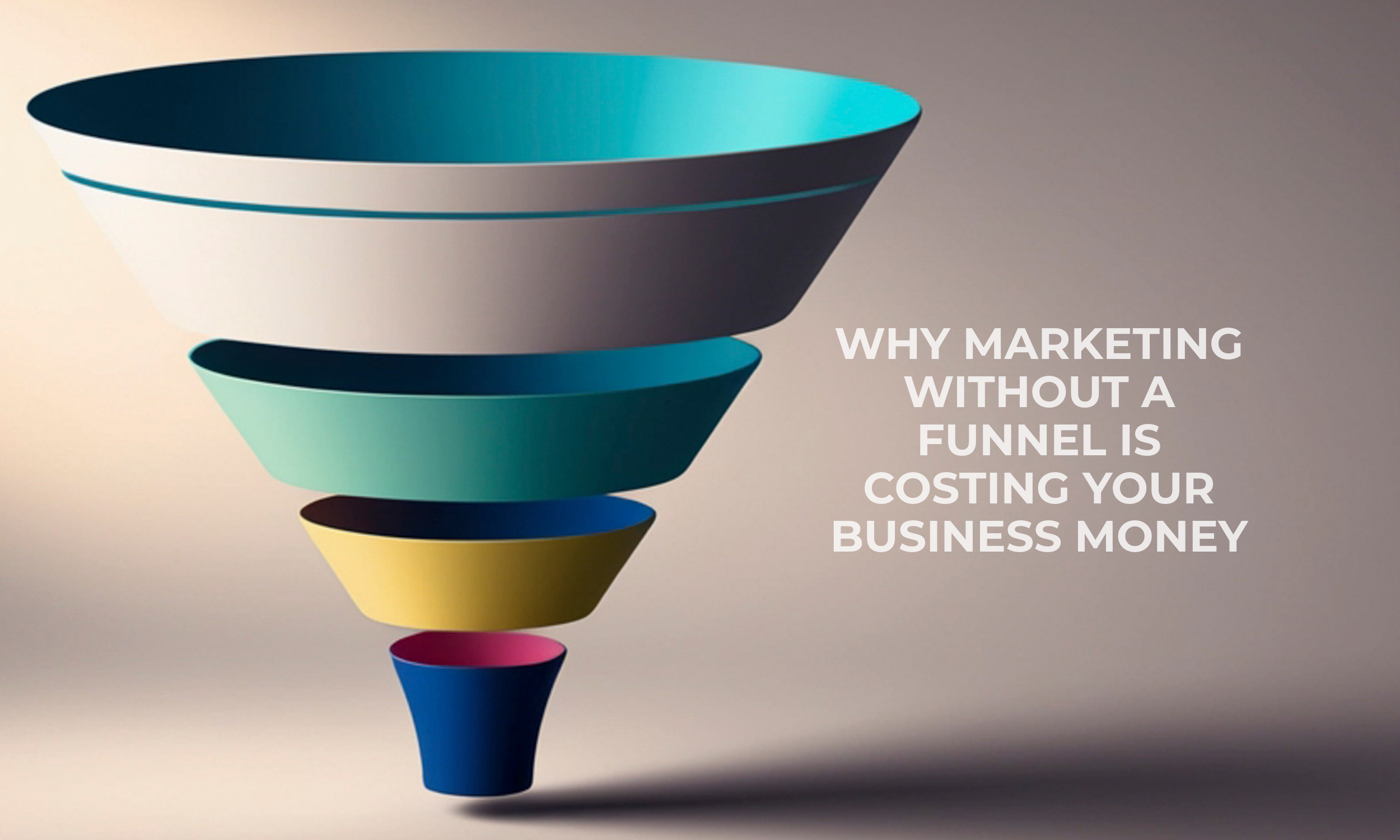
(And Why Mid-Market Companies Outgrow “Random Acts of Marketing”)
Most growing businesses don’t have a marketing problem — they have a structure problem.
They post on social media.
They try Google Ads.
They run a few email campaigns.
They redesign their website.
But nothing connects.
The result?
Money gets spent. Activity happens. But revenue doesn’t scale.
This is the moment when a business stops being “small” and enters mid-market territory — and it’s exactly when marketing needs to evolve from tactics into a funnel-based growth system.
If you’ve met with Natalie, you’ve seen the funnel example — because everything we build at Ranalli Marketing is engineered around this structure.
Not trends.
Not guesswork.
Not “post more on Instagram.”
A funnel.
The Difference Between Small Business Marketing and Mid-Market Marketing
Small business marketing is typically activity-based:
“We should post more”
“We should try ads”
“We should send a newsletter”
“We should redo the website”
Mid-market marketing is system-based:
Every channel has a job
Every campaign has a phase
Every lead is intentionally moved forward
Every dollar has a measurable purpose
A funnel is the operating system that makes this possible.
The Four Funnel Phases Every Scalable Company Needs
1. Awareness — Where Demand Is Created
This is where your future pipeline begins. At this stage, your audience isn’t searching for you — yet.
Your job is to enter their world with relevance, authority, and clarity.
The goal is not selling.
The goal is positioning, credibility, and visibility.
2. Consideration — Where Trust Is Built
Once someone knows who you are, they start evaluating. This is where most businesses quietly lose deals — because they don’t intentionally nurture. Done right, this is where prospects become educated, confident, and ready.
3. Conversion — Where Revenue Happens
This is the moment of action. Your website, landing pages, consultations, demos, and sales pages must remove friction and create clarity. This is where funnels become measurable.
4. Advocacy — Where Growth Multiplies
Most companies stop marketing once the sale happens. High-growth companies don’t. They build advocacy systems. This phase reduces acquisition costs and increases lifetime value.
Why Organic Marketing Alone Isn’t Enough
Organic marketing builds credibility.
Paid marketing builds scale.
Mid-market growth requires both.
Organic creates authority and trust.
Paid creates velocity and predictability.
When they’re engineered into a funnel together, you don’t “try marketing.” You operate a revenue engine.
This Is Why Funnels Are the Core of Everything We Do
At Ranalli Marketing, we don’t sell campaigns. We build growth infrastructure.
Funnels create:
Predictable lead flow
Scalable revenue
Clear ROI visibility
Lower cost per acquisition
Better sales conversions
And most importantly — clarity for leadership.
You know what’s working. You know what needs attention. You know where your money is going. Marketing is no longer about being “present online.” It’s about building a system that converts attention into revenue — intentionally, predictably, and profitably.
If your business has outgrown random marketing activity, it’s time to build a funnel.